4 Square Ball Game - Free Puzzle Game Online
4 square ball game is a free puzzle game you play in your web browser on desktop, tablet, or mobile. A colored ball approaches your square each turn, and you have to change your square to match its color before it arrives. The mechanic is simple, but the speed keeps increasing, and one mistake ends your run. It's the kind of game that looks easy for the first ten seconds and then demands perfect t
The First Minutes
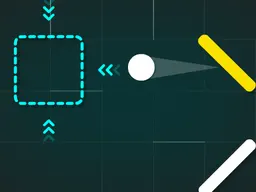
When you start, a single square sits in the center of the screen. A colored ball appears and moves toward it. Your job is to tap or click to change your square to match the ball's color before they meet. The first few turns feel almost relaxed—plenty of time to react, the ball moves at a gentle pace, and the colors are obvious. You'll win the first three or four rounds without thinking. Then the speed picks up. Not by a huge jump, but enough that your reaction time gets tested. By turn seven or eight, you'll notice the ball is faster and the window to change color closes tighter. Most players make their first mistake here, when the game shifts from feeling manageable to feeling tight. That's the design working exactly as intended.
Main Mechanic
The core loop is touch-and-respond. You watch the incoming ball, identify its color, and tap the screen (or click your mouse) to shift your square to that color before impact. Each successful match gives you a point and triggers the next ball. There's no menu between rounds, no pause, no recovery time—the next ball comes immediately. The colors stay consistent and clear, so there's no ambiguity about what you're supposed to match. The challenge isn't figuring out the rule; it's executing it faster as the game accelerates. This is a hypercasual design, meaning the entire experience is built around one repeatable action that gets progressively harder. You're not collecting items, solving puzzles in stages, or unlocking abilities. You're just playing one continuous run until you tap the wrong color or react too late.
Controls
The game supports both mouse and touch control, so it works the same way whether you're on desktop or mobile. On keyboard and mouse, you typically click the screen or use a key press to change your square's color. On mobile and tablet, you tap anywhere on the screen. Some versions of four square ball games let you tap different areas to select different colors, while others cycle through colors with each tap. The exact input depends on which implementation loads, but in all cases the control is instant—there's no lag between your tap and the color change. What matters is speed and accuracy, not complex button sequences. If you're playing on a phone, the vertical screen layout means the ball approaches from the top and your square sits below, giving you a clear sight line. Desktop players get the same view, just with more screen real estate.
Mistakes Everyone Makes
New players often wait too long before tapping, thinking they need to be absolutely certain the color is right. By then the ball is already too close. The correct instinct is to tap the moment you identify the color, not when you're certain impact is imminent. Another common error is tapping the same color twice in a row, assuming you need to cycle through the palette. If your square is already blue and the next ball is blue, you don't need to tap—you can let it hit without changing anything. Some players don't realize this and waste a tap trying to refresh the color. The third major mistake is panicking when the speed ramps up. The game doesn't introduce new colors or surprise mechanics at high difficulty; it just makes the existing action faster. Panic leads to sloppy taps and wrong colors. The players who last longest stay calm and trust their rhythm, even when things get intense.
When It Gets Difficult
Around turn 15 to 20, the game reaches a phase where a single lapse ends your entire run. The acceleration is relentless. Balls arrive faster, the gaps between them shrink, and your reaction window compresses to under a second. Colors come in quick succession with no pattern—you can't predict the next ball's color, so you can't prepare in advance. You have to see it, process it, and act. This is where most runs end. The difficulty isn't artificial; the game isn't cheating or throwing impossible combinations at you. The colors are always clear and always distinctly different. The challenge is purely about your ability to sustain focus and execute the same action with perfect accuracy under time pressure. Some players find a rhythm and push past 20, 30, even 40 turns. Others hit a wall around turn 18 and can't break through. That wall is usually about muscle memory and confidence, not skill.
How to Improve for Real
Play multiple short runs instead of one long session. Each run teaches you something about your reaction time and your rhythm. After five or six attempts, you start to feel where the danger zone is and which balls trip you up most. The second concrete improvement is to watch the ball, not your finger. Beginners stare at their hand or the tap point and look up to confirm. Experts keep their eyes on the incoming ball and tap peripherally, so they catch color changes earlier. A third tactic is to establish a physical routine—tap the same spot every time, use the same finger, breathe on the same beat. Consistency reduces decision-making overhead. When your hand already knows where to tap, your brain can focus entirely on the color. Finally, accept that some runs will end on turn 13 and some on turn 35, and that's just variance. The game is testing your best effort each time, not your average. Chasing a personal best means playing until you hit your ceiling, not playing until you're tired.
What to Expect After One Hour
After an hour of play, you'll have a clear sense of where your limit sits. Most casual players push into the 20s or 30s before hitting a brick wall. If you're exceptionally sharp, you might reach 40 or 50. The game doesn't change—no new mechanics unlock, no difficulty modes switch on, no bonus rounds activate. What changes is your ability to execute the core action under stress. You'll also notice that some colors feel easier to catch than others, even though they're all equally distinct. This is just pattern recognition; your brain starts predicting which colors appear more often or in certain sequences, even though the sequence is random. One hour is also when the addictive loop becomes clear. The game gives you constant, instant feedback—you succeed or fail immediately. There's no frustrating delay, no artificial padding. Each run is short enough to fit between other activities, but the urge to try again is strong because the next run might break your record. That's hypercasual design in its purest form. You're not playing for story, progression, or rewards. You're playing to push a number higher.
Controls
Keyboard and mouse
- Click or press a key to change your square's color
- Tap the same control repeatedly to cycle through color options
- Most versions respond instantly to any click or keystroke
Touch
- Tap the screen to change your square's color
- Tap repeatedly to cycle through available colors
- Response is immediate; any tap location works the same
FAQ
- Is this game really free and do I need to download it?
- Yes, it's completely free and plays in your web browser. There's no download, no installation, and no account required. You just open the page and start playing immediately.
- How does the color change work exactly?
- When you tap or click, your square changes to a new color. The exact method (whether it cycles through colors or lets you choose) depends on the version, but the result is the same: your square becomes a different color. Your goal is to make it match the incoming ball before they collide.
- Can I pause the game or take a break mid-run?
- No. The game runs continuously from the moment you start. One run continues until you fail. The upside is that every run is short and self-contained, so you can play for 30 seconds or 5 minutes depending on how long you last.
- Does the game save my high score?
- That depends on the browser and whether local storage is enabled, but most modern versions track your best score so you can see it next time you play. Your score is stored locally on your device.
- What happens if I match the color but tap too late?
- If the ball reaches your square before the color matches, the run ends. Timing matters as much as accuracy. You have to change the color and have it stay changed before impact.
- Is there a way to slow the game down or adjust difficulty?
- No. The game has one difficulty curve that accelerates over time. There are no settings, difficulty levels, or ways to modify the speed. The acceleration is part of the design.
- Why do some runs feel easier than others?
- Luck plays a role in which colors appear in which order, but the bigger factor is your focus and reaction time on any given attempt. Some days your rhythm is sharp, some days it's off. The game itself is consistent; the variance is in the player.
- Does this work on mobile the same way as desktop?
- Yes. The game is designed for both. On mobile, it uses touch controls and displays vertically. On desktop, it uses mouse or keyboard. The mechanic and speed are identical.
Similar games
More Puzzle Games games →