100-point game - Free Puzzle Shooter
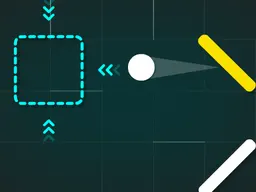
Point is a free puzzle shooter game you play in your browser on mobile where you control a rotating cannon at the bottom of the screen and fire at a red ball hidden among a rolling line of colorful balls. Time your shot right and the balls shift to a new position—miss twice in a row and it's game over.
What is this game
Point strips away every distraction from the puzzle-shooter formula and leaves you with pure timing and aim. The game displays a horizontal line of balls rolling across the screen. Exactly one of them is red, and that's your target. You sit at the bottom with a cannon that swings left and right on its own. Your job is to watch the balls move, predict where the red one will be, and tap to fire at exactly the right moment. When you hit it, the entire line of balls disappears and respawns in a new position. When you miss twice consecutively, the game ends. That's the whole structure. No power-ups, no levels to unlock, no story—just you, your reflexes, and your ability to judge angles and timing under pressure. It's the kind of game that takes about five seconds to understand and a lifetime to master.
Is it worth playing
Point works best if you like arcade-style challenges where a single mistake costs you the run. There's no grinding, no wait timers, no progression systems to carry you forward. Every attempt is a fresh test. If you enjoy games where skill is the only thing between you and victory, this delivers that immediately. The simplicity is the appeal—the game doesn't try to impress you with graphics or complexity. It respects your time and your intelligence. You load it up, play for two minutes or twenty, and quit whenever you want. For kids learning timing and focus, it's especially useful. For adults, it's a palate cleanser between bigger games. The trade-off is that it has no story, no narrative hook, and no sense of progression beyond a high score. If you need those things to stay interested, Point probably isn't for you. But if you remember why you loved Flappy Bird or early mobile arcade games, you'll recognize what Point is doing.
How to get started
Load Point in your browser, and you're in a game immediately. There's no tutorial, no setup screen, no options menu. You see the balls rolling, the cannon at the bottom, and a visual indicator of where your shot will go. The first few attempts teach you the mechanic faster than any instruction ever could. Watch which ball is red. Watch how fast they move. Watch where your cannon is aiming. Fire. If you hit the target, feel the timing. If you miss, fire again—you get two mistakes before it's over. Most first-time players need about three to five attempts to stop panicking and start actually aiming. After that, the real game begins: you're no longer learning how to play; you're learning how to play well. The balls move at a consistent speed, so patterns emerge if you stay focused. Some players develop a rhythm, others prefer to react to each new setup fresh.
Controls
On desktop, the game responds to mouse clicks or keyboard taps. On mobile, you tap anywhere on the screen to shoot. There are no other inputs. The cannon aims and rotates automatically; you only decide when to fire. This simplicity is intentional. Because you have only one button to think about, all your cognitive load goes into timing and spatial judgment. There's no fumbling with directional buttons or managing multiple abilities. You see the shot, you judge the angle, you tap. That's the interface. It's deliberately minimal because the challenge isn't mechanical complexity—it's reading the moment and committing to it.
What changes over time
The core rules don't change—red ball appears, you shoot, you have two chances—but your perception of the game deepens. Early on, you're reacting to what you see. After a few games, you start predicting where the red ball will be before you fire. You notice patterns in how the balls spawn and move. Some players report that they begin to 'feel' the timing rather than consciously calculate it, the way you might catch a ball without thinking about the math. The difficulty doesn't increase in a traditional sense—there are no harder levels or faster speeds unlocked as rewards. Instead, you're playing against yourself and the randomness of each new ball arrangement. The challenge is consistency: can you execute the same good decisions across ten attempts, twenty attempts, a hundred? Some arcade games add more obstacles or speed to keep things fresh. Point trusts that the puzzle itself is enough.
Mistakes that cost dearly
The two-strike rule is unforgiving, and that's by design. Your first miss stings but doesn't end the run. Your second miss in a row ends it immediately. This creates a psychological shift after the first failure. You've used one of two lifelines. The pressure increases. Some players panic and rush their next shot; that's when the second miss happens. The players who survive longest are the ones who stay calm after the first failure and treat the second shot as if they had three chances. Don't fire until you're certain. The balls move predictably, so uncertainty usually means you haven't looked long enough. Rushing is the most common cause of back-to-back misses. The second most common mistake is misunderstanding the aiming arc. The cannon shows you where the ball will go, but new players often misread it, especially when the cannon is at an extreme angle. Spend your first few games just watching the aim indicator without firing to build mental calibration.
Where and what device to play on
Point runs in any modern web browser, so there's nothing to download or install. Desktop computers, laptops, tablets, and phones all work. The game is optimized for mobile phones in portrait orientation at 720x1280 resolution, which matches most smartphones from the last decade. If you play on a larger screen like a desktop monitor or tablet, the interface scales up but functions identically. You can play for free without creating an account. Just visit AtomoPLay.com, search for Point, and start immediately. Because it's browser-based, you can play one round at lunch break, another on the commute, another while waiting in line. There's no launcher, no login requirement, no barrier between you and the game. That accessibility is part of why these simple, well-designed puzzles reach so many people.
Controls
Keyboard and mouse
- Click anywhere on screen to shoot
- Cannon rotates automatically; no directional input needed
Touch
- Tap anywhere on screen to shoot
- Cannon rotates automatically; no other inputs required
FAQ
- Is Point really free?
- Yes, Point is completely free to play in your web browser. There's no cost to download, no premium features locked behind payment, and no required account setup.
- How do I aim at the red ball if it's moving?
- The cannon automatically rotates left and right across the bottom of the screen. Your job is to predict where the red ball will be when your shot reaches it, then time your tap to coincide with that moment. The aiming arc shown by the cannon helps you visualize the trajectory.
- What happens after I hit the red ball?
- The entire line of balls disappears, and a new arrangement of balls spawns in a different position on the screen. The pattern changes each time, so you can't memorize positions. You have to repeat the process: identify the red one, wait for the right moment, and fire again.
- Why does the game end after two misses?
- The two-strike rule creates tension and keeps the pacing tight. One miss teaches you a lesson; a second consecutive miss means you haven't learned it quickly enough. This structure forces focus and makes each shot feel consequential. It prevents long, meaningless losing streaks.
- Can I play Point on my phone?
- Yes. Point is designed specifically for mobile and works on any smartphone in portrait mode. It also works on tablets and desktop browsers, but mobile is where it's optimized.
- Is there a way to practice without losing immediately?
- No. Every attempt counts from the first shot. There's no practice mode or unlimited shots option. The tension of the two-strike rule is the entire point of the game, so removing it would remove what makes it challenging.
- Do the balls move faster as I improve?
- The ball speed stays consistent throughout your game. The difficulty comes from the randomness of where the red ball appears next, not from escalating mechanics. Your skill ceiling is determined by your timing precision and ability to stay calm under the two-strike pressure.
Similar games
More Puzzle Games games →