Colored Squares Game - Free Puzzle Challenge in Your Browser
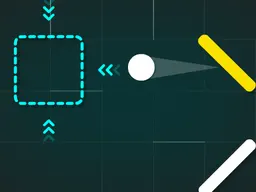
Colored Squares is a free puzzle game you play directly in your web browser on desktop or mobile, where you tap to keep a bouncing ball away from walls that match its current color. The challenge grows as the ball moves faster and the color shifts become more frequent, testing your reflexes and timing against an endless stream of obstacles.
The Idea of the Game
Colored Squares strips away complexity to focus on one core mechanic: survival through color avoidance. A ball bounces across your screen, and the walls surrounding it change color constantly. Your job is simple but demanding—tap at the right moment to prevent the ball from hitting a wall that shares its own color. Tap too early and you waste your move. Tap too late and the collision ends your run. The game board fills with colored obstacles, and you're always one mistake away from starting over. There's no story, no levels to unlock, no shop to browse. Just you, your timing, and the relentless pace that keeps accelerating. It's the kind of game that takes thirty seconds to understand and hours to master, the kind where your personal best becomes a personal challenge.
How to Play
You're watching a ball move through a confined space. That ball has a color—let's say blue. The walls around it also have colors, but they're constantly rotating through different shades. When a wall turns blue and the ball is still blue, they can't touch. Your screen is your control panel. Every tap sends a signal that changes the ball's color to something else, buying you time before the next dangerous match happens. The trick is reading ahead. You see the wall changing color, you anticipate which color the ball will need to become, and you tap before the collision window closes. Miss that window by half a second and it's game over. Early on, the rhythm is forgiving. You have time to breathe between taps. Around the twentieth obstacle, the pace shifts. Walls start changing faster. The ball accelerates. Your brain has to stop thinking and start reacting. That's where most players first feel the wall of difficulty. But players who push past that point develop a rhythm—a kind of dance with the screen where your taps sync with the color changes almost automatically.
Controls
This game lives on the principle of instant response. You need exactly one action repeated over and over, refined to perfection. On desktop, use your mouse: click anywhere on the screen to change the ball's color. On mobile and tablets, tap anywhere on the screen with your finger. There are no directional buttons, no complex button combinations, no menu navigation during gameplay. Just one input, used with precision and timing. The simplicity is deceptive. New players often tap too frequently, burning their color changes before they're needed. Experienced players develop patience—they tap only when the math demands it, when the next wall color makes a change necessary. Some players find a rhythm by tapping in patterns. Others develop a feel for the exact moment based on how fast the walls cycle. Your phone or tablet's touch sensitivity matters here. On unresponsive screens, your taps might register a fraction of a second late, enough to kill a good run. Desktop players sometimes find a rhythm with their mouse click faster than mobile players do, simply because clicking feels more precise than touching.
Strategies That Work
The most dangerous mistake is panic tapping. When walls start cycling fast, new players mash the screen repeatedly, wasting color changes and guaranteeing a collision they could have survived. The first rule of Colored Squares is: wait. Watch the wall colors. Count the cycle if you can. Tap only when you see the danger coming. The second rule is: learn the pace of color rotation. It's not random. Walls follow a pattern, and if you play a few games in a row, your brain starts predicting the next color before it arrives. That prediction saves you. By the time many players reach their fifth or sixth attempt, they're already faster than they were on attempt one. The third rule is: understand the ball's current color at all times. You can't afford to be confused about what color you're working with. Glance at the ball, confirm its shade, then look at the walls and plan your next tap. Many runs end not because the reflexes failed but because the player lost track of what color everything was. The fourth rule is: accept that some runs are already lost before you realize it. Sometimes the pattern lines up against you—the ball and wall colors collide before you have a legal moment to change. These aren't failures of strategy; they're the random variance that keeps every run feeling different. Learn from them, don't resent them.
What Separates Strong Players
Good players tap. Great players tap at precisely the right moment, and the difference is often just one or two frames. When you watch someone with a high score, you'll notice they're not tapping constantly. They're waiting. They tap once, maybe twice per wall cycle, choosing the exact peak moment when the danger is highest. They also make peace with the screen's edge. Colored Squares doesn't have safe zones or corners where you can hide. Everywhere on the board is equally dangerous. The best players accept this and focus entirely on the color math instead of looking for shortcuts. They also maintain consistency across multiple runs. A player who can survive twenty obstacles once but crashes after five the next time is still learning. The elite players build up mental momentum. They play three or four games in a row, warming up their reflexes, calibrating their sense of timing. By game four, they're often hitting personal bests. Weak players take long breaks between runs and wonder why they're rusty when they come back. Pattern recognition separates outliers from everyone else. Within ten to fifteen games, your brain should start predicting wall colors before they fully change. If you're still surprised by colors after fifty games, you're not actively learning—you're just reacting. The difference between a score of fifty and a score of one hundred eighty is almost always that the player deliberately studied the patterns instead of just playing on instinct.
Variations and Modes
The core version of Colored Squares focuses you on one mechanic in its purest form. The game doesn't advertise alternate modes or difficulty settings. What does shift is the pace itself. Every time you survive longer, the game responds by accelerating. Your first ten obstacles might scroll past at a comfortable rhythm. By obstacle fifty, the walls are cycling so fast that it feels like a completely different game. Some players prefer to pursue duration—how long can they stay alive? Others chase obstacle count—how many wall cycles can they navigate without a collision? Both approaches reveal different skills. Duration testing rewards consistency and patience. Obstacle counting rewards adaptability and the ability to handle extreme acceleration. The fact that the game has no advertised modes or story progression means your variation comes from setting personal goals. Try playing with one hand instead of two. Try playing while fatigued and see how your reflexes degrade. Try playing in a noisy environment versus silence. Each context changes what the game demands from you. For players on mobile, the game reframes itself entirely. A touch screen feels more intimate than a mouse. Some mobile players report that they tap more often but slightly later than desktop players do, suggesting that the tactile feedback changes the rhythm. There's no official leaderboard mentioned, but the game keeps your personal high score, and that becomes your rival.
Games Like This
If you've played Flappy Bird, you know the immediate predecessor to Colored Squares' design philosophy. Both games reduce the player's options to a single button and create challenge through timing and avoidance rather than strategy or resource management. Both feel trivial in the first minute and brutal by the fifth. The main difference is that Flappy Bird's obstacles were fixed—you learned the exact gaps and planned around them. Colored Squares randomizes its obstacles through color, so every run teaches you pattern recognition instead of memorization. Players who loved the minimalist reflex challenge of games like 2048 or Threes often gravitate toward Colored Squares for similar reasons. The rules are simple enough to grasp instantly, but mastery demands focus and repetition. The same applies to players who enjoyed Doodle Jump or similar endless arcade experiences where your personal best is the only metric that matters. If you prefer puzzle games with time to think, Colored Squares probably won't satisfy you. This is a game of reaction, not contemplation. But if you're drawn to games where muscle memory and timing converge, where the screen becomes an extension of your reflexes, you've found your game.
Controls
Keyboard and mouse
- Click anywhere on the screen with your mouse to change the ball's color
- Timing your clicks to avoid color collisions is the entire mechanic
Touch
- Tap anywhere on the screen with your finger to change the ball's color
- Quick, precise taps are more effective than rapid mashing
FAQ
- What exactly happens when the ball and wall touch the same color?
- The game ends immediately. Your run terminates, and you see your final obstacle count or duration. There's no second chance, no shield, no forgiveness. That's the entire point—one mistake and you're starting from zero. This is why timing matters so much. You're always one tap away from either survival or failure.
- Does the game follow a pattern or is it completely random?
- The wall colors rotate through a cycle, but the colors don't appear in a purely random sequence. If you play enough games, you'll start noticing the pattern. This is why experienced players do better—they're not reacting blindly; they're predicting based on what they've seen before. The pattern adds a learning curve that keeps the game from feeling purely luck-based.
- Can I play this on my phone?
- Yes. Colored Squares is built to work on mobile devices, tablets, and desktop browsers. The screen size adjusts to your device. On touch screens, you tap anywhere to change the ball's color. Many players find mobile more intuitive because touching the screen feels more direct than clicking a mouse.
- Is there a way to pause or slow down the game?
- No. Colored Squares runs in real time without pause options or difficulty settings. The acceleration is automatic—the longer you survive, the faster everything moves. There's no adjusting the speed. Your only control is over when you tap.
- What's a good score to aim for?
- New players often crash around the fifteen to twenty-five obstacle mark as the speed ramps up. Getting past fifty obstacles means you've adapted to the acceleration. Reaching one hundred is a solid achievement. Beyond that, you're competing mainly against your own previous bests. There's no scoring system with points—just a counter tracking how many obstacles you survived.
- How long does each game last?
- It depends entirely on your skill and luck. Your first games might end in thirty seconds. A good run could last a minute or two. The absolute longest runs extend to three or four minutes, but those are outliers. Most single games are bite-sized experiences you can play between other activities.
- Do I need to download anything or pay money?
- No. Colored Squares runs free directly in your web browser. No downloads, no installation, no in-app purchases. You start playing immediately when you load the page.
Similar games
More Puzzle Games games →