Block It Play - Free Puzzle Game
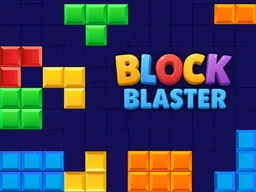
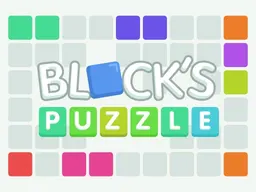
Block It is a free block puzzle game you can play right now in your web browser on desktop or mobile. You pick up sets of blocks and drop them onto a board, trying to create complete horizontal or vertical lines of 10 blocks to clear them and rack up points. The more blocks you eliminate at once, the higher your score climbs. It's a straightforward puzzle experience that tests your planning and sp
Quick Summary
Block It is a free block puzzle game you can play right now in your web browser on desktop or mobile. You pick up sets of blocks and drop them onto a board, trying to create complete horizontal or vertical lines of 10 blocks to clear them and rack up points. The more blocks you eliminate at once, the higher your score climbs. It's a straightforward puzzle experience that tests your planning and spatial awareness.
Objective
Your goal is simple: place falling block pieces onto the board in ways that form complete lines of 10 blocks either horizontally or vertically. When a line fills completely, those blocks vanish from the board, clearing space for new pieces. The catch is that the board gradually fills up, and you lose when there's nowhere left to fit incoming block sets. The real challenge is thinking two or three moves ahead, placing blocks not just to score immediately but to keep the board manageable. Every placement matters because wasted space is your enemy. You're racing against your own bad decisions more than against any timer, which means every game teaches you something about board management and forward planning.
Controls
Block It keeps its controls minimal and intuitive. On desktop, you use your mouse to grab blocks and drag them to where you want them placed on the board. Click and hold a block set, move your cursor to your target spot, then release to drop it. On mobile and tablet, the touch controls work the same way: tap and drag a block set with your finger, then lift your finger to place it. There's no keyboard component to this game, and no hotkeys to memorize. The entire interaction is visual and tactile, which makes it feel natural whether you're at a computer or swiping on a phone.
Progression and Rewards
Block It doesn't follow a level-based structure with stages you unlock or bosses you defeat. Instead, your progression is measured purely through score. Every time you clear blocks, you earn points, and the reward system is built right into the mechanic: clearing more blocks at once gives you significantly more points than clearing them one or two at a time. This means you're constantly chasing better combos, better positioning, and more satisfying clears. There's no progression system that gates content, so you're free to keep playing as long as you can keep the board under control. Your only real opponent is your own decision-making and your ability to see patterns before they become problems. High scores are the only currency that matters here, which keeps the focus on pure puzzle-solving skill rather than grinding for unlocks.
Difficulty and Learning Curve
Block It starts forgiving in your first few moves because the board begins nearly empty and you have room to experiment. You'll get a feel for how pieces fit together and learn how the game reads a completed line. But by the time your board is half-full, the difficulty spike becomes apparent. Suddenly every placement has consequences. A mistake on turn five that seemed fine at the time becomes a bottleneck on turn fifteen when you can't fit any new pieces. This is where many players hit their wall: they understand the rules immediately but struggle with the strategic thinking required to plan ahead. The learning curve is gentle but the skill ceiling is genuine. Casual players can jump in and enjoy a few relaxing rounds, but anyone trying to rack up a real high score will need to develop actual board-reading skills and learn to spot bad move patterns before committing to them.
On Mobile and on Desktop
Block It works identically whether you're playing on your phone, tablet, or computer because the game was built in HTML5 to scale smoothly across devices. The screen size adjusts from 800x450 pixels up or down depending on what you're using, but the gameplay never changes. Drag and drop works just as naturally on a touchscreen as it does with a mouse. Many players prefer the tactile feedback of mobile play because dragging blocks with your finger feels more direct and responsive than using a cursor, but desktop players get the advantage of a bigger screen where they can see the entire board state more clearly. There's no exclusive content or different rules depending on your device, so you can start a game on your phone during a commute and pick it right back up on your computer at home.
Who This Is For
Block It appeals to puzzle fans who enjoy spatial reasoning games and anyone looking for a quick session of focused mental activity. If you like games that reward patience and planning over reflexes and luck, this is your speed. It works for players aged eight to eighty because the core mechanic is intuitive enough for kids to grasp but deep enough for adults to spend hours optimizing their strategies. It's perfect for someone who wants a break from action games or story-driven experiences, something you can pick up for five minutes or lose an hour to without noticing. The game has no violence, no story, and no timer stress, so it's ideal for relaxed play sessions where you're thinking rather than reacting. Casual puzzle enthusiasts and strategy-minded players alike find something to chew on here, which is why games like this have staying power across different gaming communities.
Controls
Keyboard and mouse
- Click and drag a block set with your mouse to position it on the board
- Release the mouse button to place the block at your chosen location
Touch
- Tap and drag a block set with your finger to position it on the board
- Lift your finger to place the block at your chosen location
FAQ
- Do I need to download anything to play Block It?
- No. Block It runs entirely in your web browser, so you just click and start playing. There's no installation, no files to download, and nothing taking up space on your device. It works on any computer or phone with a modern browser.
- What happens when my board fills up completely?
- When you can't fit the next block set onto your board anywhere, the game ends. That's your loss condition. You'll see your final score, and then you can start a fresh round. The key to playing longer is clearing blocks before the board becomes too cluttered, which is why planning ahead is so important.
- Does it matter how big the blocks are that I place?
- Yes. The game offers you different shaped block sets to place, and each takes up a different footprint on the board. Some are small L-shapes or single blocks, while others are larger configurations. Part of the puzzle is figuring out where to fit each unique shape so that you eventually form complete lines of 10 blocks.
- Is there a time limit per move?
- No. You can take as long as you need to decide where to place each block. There's no countdown timer or rush mechanic, so you can think through your decisions carefully and plan multiple moves ahead.
- Can I undo a move if I make a mistake?
- The game doesn't have an undo feature based on the standard ruleset. Once you place a block, it stays there. This is part of what makes the game challenging, because you need to think before you commit to a placement rather than experimenting freely.
- Why do I get more points for clearing many blocks at once?
- The game rewards you more heavily for combo clears because it encourages strategic thinking. Clearing ten blocks in one move by forming a complete line is harder than clearing them one at a time, so the higher score reflects that difficulty and skill. It's an incentive to plan ahead and set up bigger eliminations.
- Does Block It have different game modes?
- The core experience is a single endless mode where you play until you can't fit any more blocks. The goal is always the same: form complete lines of 10 blocks and chase your highest score.
Similar games
More Puzzle Games games →