Basic Math
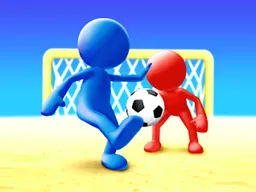
Basic Math is a free browser-based math game for kids that runs on desktop and mobile, where you solve addition and subtraction problems to progress through levels. You'll match numbers with soccer ball visuals to find the correct answer, choosing between greater than, less than, or equal to options, and unlock rewards as you clear each stage.
The Game's Concept
Basic Math strips away distractions and focuses on what matters: teaching children the fundamentals of arithmetic. The game presents arithmetic problems on screen and asks you to identify the correct relationship between numbers using visual feedback. Instead of abstract symbols alone, the game uses soccer balls to represent quantities, making it easier for young learners to grasp what numbers actually mean. Each level introduces or reinforces a specific math concept—addition, subtraction, and comparison operators like greater than and less than. The progression is gradual; you won't see complex multi-step equations early on. What makes this different from a worksheet is the immediate visual reinforcement: you see the balls, you count them, you match them to the answer. The game rewards you for clearing levels, which means every correct answer moves you closer to unlocking something new. It's designed specifically for kids in early elementary school who are building confidence with basic arithmetic, not for anyone trying to cram for algebra.
How to Play
When you start, the game shows you a math problem—for example, three plus two, or five minus one. Below or beside the problem, you'll see visual representations, often soccer balls grouped to show the numbers involved. Your job is to identify the correct answer from the options given. The game presents comparison choices: is the answer greater than a number shown, less than it, or equal to it? You select the correct relationship, and if you're right, you advance. If you're wrong, the game typically gives you another chance or shows you why the answer was incorrect using those same ball visuals to count and verify. As you complete levels, the numbers grow slightly larger or the operations become slightly more complex, but the core mechanic stays consistent. The visual aids—the soccer balls—are the training wheels here; they help you verify your thinking before you commit to an answer. This means a child who's still counting on their fingers can use the visual representation to double-check their work, building confidence without frustration. Levels are short enough that each session feels accomplishable, and rewards appear frequently enough to maintain motivation.
Controls
The game is designed to be straightforward to operate on any device. On desktop with a mouse, you click on your chosen answer. On a mobile phone or tablet, you tap the answer directly on the screen. There are no complex button combinations, no timing-based input, and no precision required beyond pointing at the correct option. The interface is sized for fingers, not mouse cursors, even though it works on both. Most of your interaction is simply selecting from a set of options presented clearly on screen, which means accessibility is built in—kids with varying motor skills can play without struggling against the controls.
Strategies That Work
The most effective approach is to use the visual aids deliberately. Don't rush to click an answer; actually count the soccer balls shown. This builds the mental math habit that makes you faster later. When you're unsure, the balls are there to verify your thinking, so take the extra two seconds to check. Understanding the greater than and less than symbols is crucial; many kids confuse them at first. The game presents them repeatedly with visual proof, so each time you see them, reinforce which direction they point. Another helpful pattern: recognize that the first levels are teaching you the symbols themselves, not testing your speed. Accuracy builds speed. If you find yourself getting stuck on a particular operation, it usually means the concept hasn't clicked yet—go slower, count every ball, and let the repetition do its work. Rushing through the early levels to reach harder content defeats the purpose; the game is structured so that mastery at each level makes the next one easier.
What Separates Skilled Players
Kids who do well at Basic Math move past visual counting quickly without abandoning it entirely. They start to recognize five plus two without needing to point at each ball, but they still glance at the visual representation to confirm before answering. They also internalize the comparison operators; greater than stops feeling like a confusing symbol and starts feeling like a familiar tool. The real separation, though, comes from patience. Players who rush through and pick answers without checking the visuals often hit a wall where the numbers get larger or the operations stack up, and suddenly they don't know why they're getting stuck. Players who treat each level seriously, use the visual feedback every time, and move at a steady pace tend to progress smoothly. It's not about being naturally gifted at math; it's about building the habit of verifying your thinking with the tools the game gives you.
Variations and Modes
The game focuses on a single progression through levels rather than multiple modes or difficulty settings. Each stage introduces or reinforces core arithmetic concepts, and the reward system unlocks content as you clear levels. The structure means there's no branching path or hidden mode to discover; instead, the game is designed as a linear progression where each level builds on the skills from the previous one. This straightforward approach is intentional for the age group it serves. Young learners benefit from clarity and consistency, not from having to choose between modes or navigate complex menus.
Similar Games
If you enjoy Basic Math, you might look for other educational math games that use visual feedback, such as games that teach number recognition, counting, or early multiplication. Games in the school and educational categories often share this philosophy of making abstract concepts concrete through imagery. The hypercasual category itself includes many games with simple click-based mechanics and level progressions, though most aren't math-focused. The key similarity you'd be seeking is clear feedback, short sessions, and gradual difficulty increase—qualities that make learning feel like play rather than work.
Controls
Keyboard and mouse
- Click on the correct answer option with your mouse
- Navigate between screens using click-based buttons
Touch
- Tap on the correct answer option with your finger
- Navigate between screens using tap-based buttons
FAQ
- Is Basic Math really free, and do I need to download anything?
- Yes, it's completely free to play in your web browser. There's no download required—just click and start playing on any device with a browser, whether it's a computer, tablet, or phone.
- What math concepts does the game teach?
- The game covers addition, subtraction, and comparison operators like greater than and less than. It's designed for kids who are beginning to learn basic arithmetic, so it focuses on single and double-digit numbers and straightforward operations rather than advanced math.
- How do the soccer balls help me understand the answers?
- The soccer balls are a visual representation of the numbers in the problem. If the problem says three plus two, you'll see three balls and two balls grouped separately, making it easy to count and verify the total. This helps kids move from abstract numbers to counting real objects, which is how early math learning works.
- Can I play this on my phone, or is it only for computers?
- It works on both. The game is built to run smoothly on phones and tablets as well as desktop computers. You tap to select your answer on mobile devices instead of clicking with a mouse.
- What happens if I get an answer wrong?
- The game typically lets you try again and shows you the correct answer using the visual aids so you can see why it was right. This helps reinforce learning without making you feel penalized for mistakes.
- How long does it take to complete the game?
- That depends on the player's pace and how many levels there are. Each individual level is quick—a few minutes at most—so you can play in short bursts or spend longer working through multiple levels in one session. It's designed to fit into different schedules.
- Is this game only for very young kids, or can older kids play too?
- It's aimed at kids who are starting to learn basic arithmetic, typically early elementary school age. Older kids or adults who want a quick mental refresher can play it too, but the content is intentionally simple and visual to serve kids in the early stages of math learning.
Similar games
More Hypercasual Games games →